
Sunpeach F1 Tomato
Solanum lycopersicum
Price: $4.95
SKU: 33999241Choose a variant:
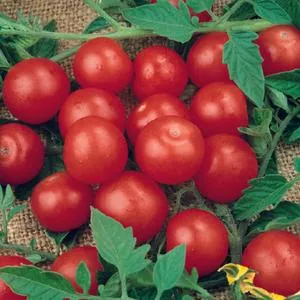
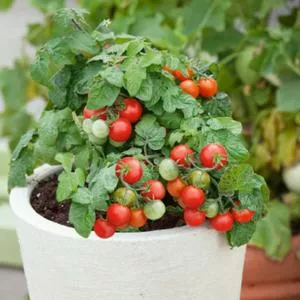
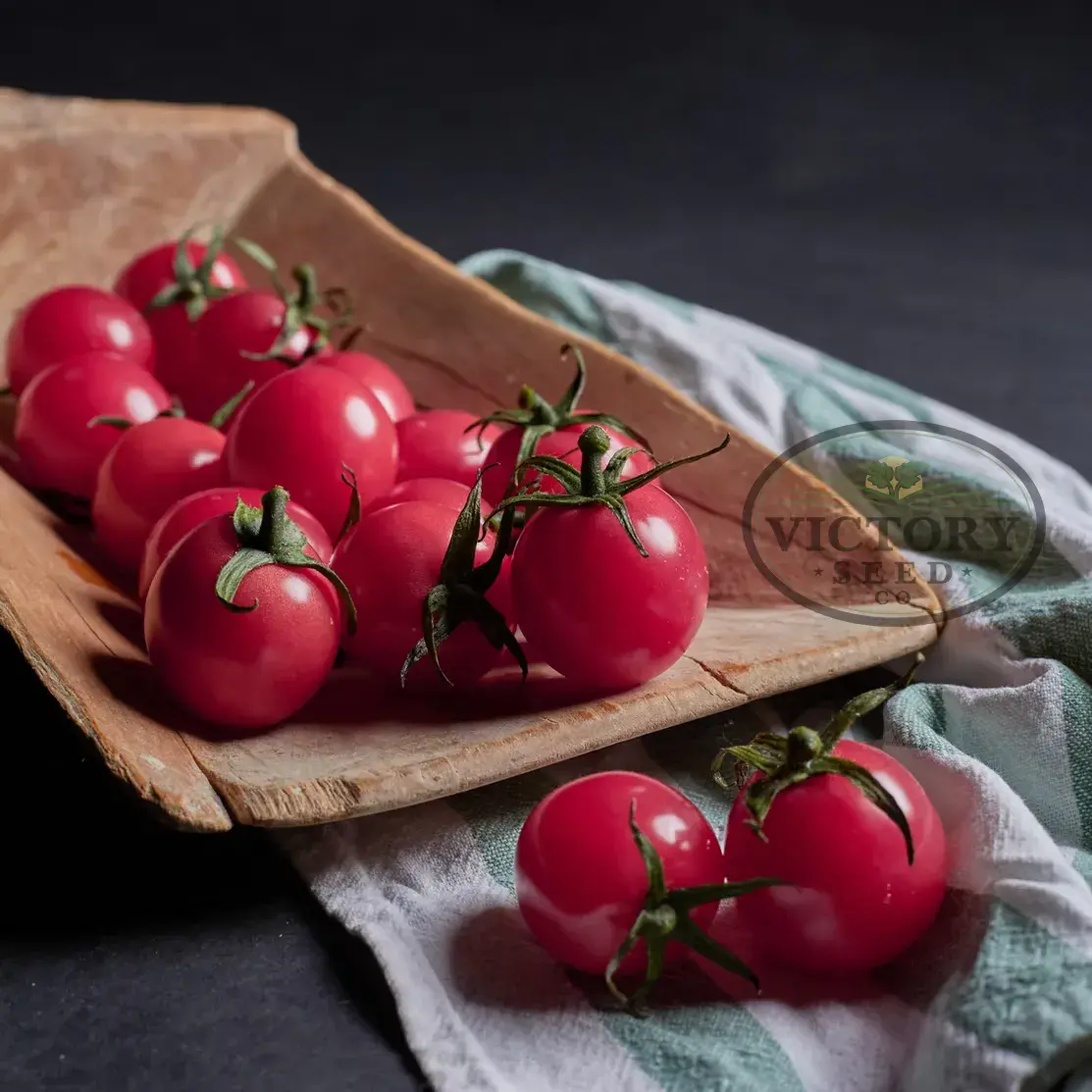
Indeterminate - 60 days to maturity. Sunpeach produces heavy yields of shiny, deep pink fruit. Each cherry is about 1/2 ounce (15-20 grams) and grows in clusters on long, sturdy trusses. Sunpeach is often called a sister variety to Sungold, the well-known orange cherry tomato. Its flavor is sweeter and less acidic than Sungold, with just enough tang to keep it fresh and balanced. These pink cherry tomatoes work well in salads, on vegetable platters, and in gourmet dishes, or you can eat them fresh off the vine.
The plants are vigorous and healthy, and the fruit resists cracking. Sunpeach has resistance to leaf mold (LM) and tobacco mosaic virus (TMV).
The plants are vigorous and healthy, and the fruit resists cracking. Sunpeach has resistance to leaf mold (LM) and tobacco mosaic virus (TMV).
Tomato Uses: Small Fruits / Salads
Days to Maturity: 60
Growth Habit: Indeterminate
Lifespan: Annual
Sun Requirements: Full Sun
Best sowing Method: Start Indoors
Disease Resistances: TMV
Genetic Classification: Hybrid
Days to Maturity: 60
Growth Habit: Indeterminate
Lifespan: Annual
Sun Requirements: Full Sun
Best sowing Method: Start Indoors
Disease Resistances: TMV
Genetic Classification: Hybrid
90 days, indeterminate - The fruit of 'Beefsteak' are large meaty, ribbed and deep scarlet red in color. Weights vary but average about twelve ounces here on our farm. Fairly soft skinned for easy slicing and a great addition to sandwiches. 'Beefsteak' is a very old standard variety. Although it is well-known, it continues to be popular for one reason; it is the classic slicing variety. Some seed companies list this as being synonymous with 'Crimson Cushion', but they have separately documented introduction dates and are different enough in characteristics to warrant separate listings.
In researching the history of the 'Beefsteak' tomato, the first instance of the variety appears in Landreth's 1890 catalog where it was used as a synonym for the variety named 'Fejee Improved'. Since 'Fejee Improved' disappeared from seed catalogs by the later part of the nineteenth century and appears to be extinct as a named variety, it is assumed that 'Beefsteak' simply became the preferred name. Our collection of Landreth Seed catalogs is not complete so this is not being declared as the documented introduction date of 'Beefsteak'. Interestingly, by 1897, "Improved Fejee / Beefsteak" was dropped from Landreth's catalog and then in 1900, H. W. Buckbee Seed Company introduced their "new" tomato called 'Beefsteak'.
There are other issues that compound and confuse matters that future research will hopefully clarify. Firstly, the term "beefsteak" is often used to describe a type or category of firm, slicing-type tomatoes. This has persisted through the twentieth century and is still a common practice today.
"Beefsteak" has also been used to describe vegetable characteristics pertaining to both color and "meaty texture" for decades (perhaps centuries). The first documented instance that we have found for the term being associated with a tomato variety was in the Washburn and Company's 1869 seed catalog. In describing their 'Maupay's Superior' tomato, a variety now believed extinct, they stated that the flesh was, ". . . almost as solid as a beefsteak." In Peter Henderson's 1895 catalog, he describes their new 'Ponderosa' tomato as being, "As Solid and Meaty as Beefsteak."
In researching the history of the 'Beefsteak' tomato, the first instance of the variety appears in Landreth's 1890 catalog where it was used as a synonym for the variety named 'Fejee Improved'. Since 'Fejee Improved' disappeared from seed catalogs by the later part of the nineteenth century and appears to be extinct as a named variety, it is assumed that 'Beefsteak' simply became the preferred name. Our collection of Landreth Seed catalogs is not complete so this is not being declared as the documented introduction date of 'Beefsteak'. Interestingly, by 1897, "Improved Fejee / Beefsteak" was dropped from Landreth's catalog and then in 1900, H. W. Buckbee Seed Company introduced their "new" tomato called 'Beefsteak'.
There are other issues that compound and confuse matters that future research will hopefully clarify. Firstly, the term "beefsteak" is often used to describe a type or category of firm, slicing-type tomatoes. This has persisted through the twentieth century and is still a common practice today.
"Beefsteak" has also been used to describe vegetable characteristics pertaining to both color and "meaty texture" for decades (perhaps centuries). The first documented instance that we have found for the term being associated with a tomato variety was in the Washburn and Company's 1869 seed catalog. In describing their 'Maupay's Superior' tomato, a variety now believed extinct, they stated that the flesh was, ". . . almost as solid as a beefsteak." In Peter Henderson's 1895 catalog, he describes their new 'Ponderosa' tomato as being, "As Solid and Meaty as Beefsteak."
Customer Reviews:
Do you have experience with this one? 📝 📣 Write a review!
No reviews have been posted yet.