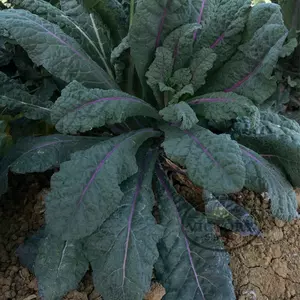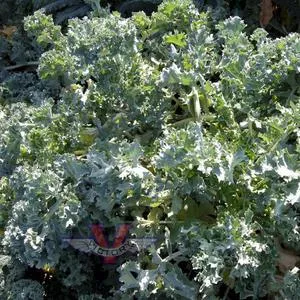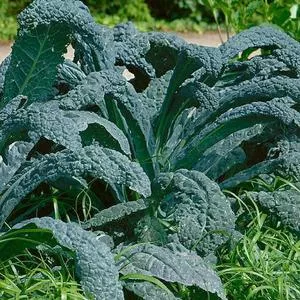

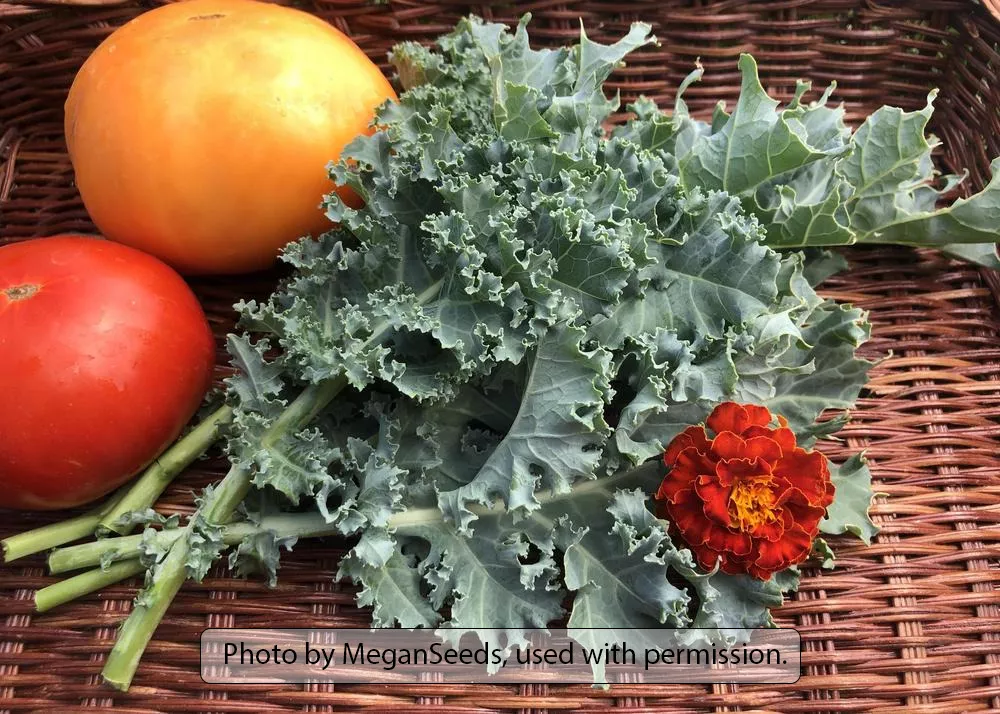
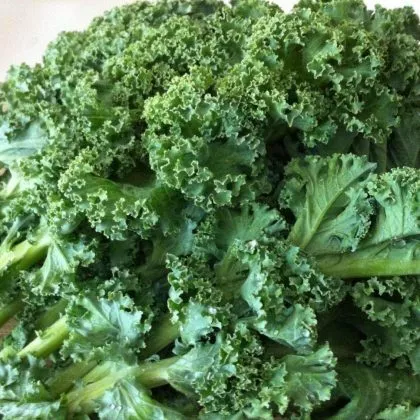
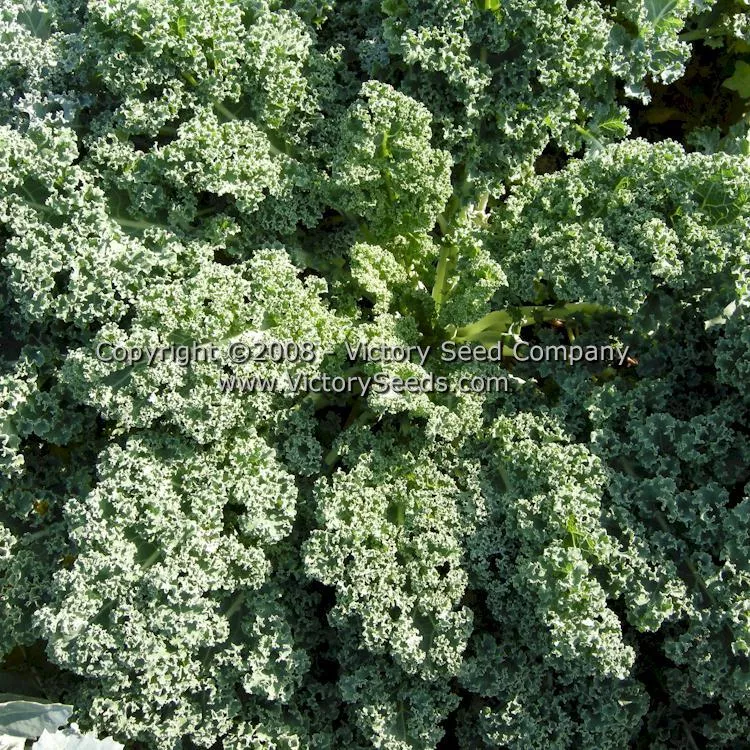
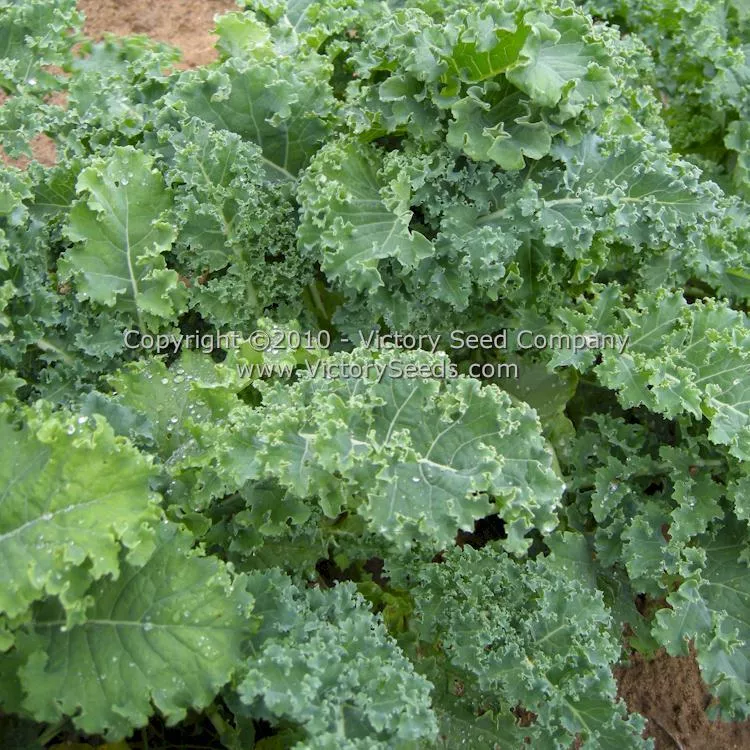


Dwarf Blue Curled Scotch Kale (Vates)
Price: $3.45
SKU: 3210011'Dwarf Blue Curled Scotch' kale was developed as a stabilized selection from 'Dwarf Green Curled' by the Virginia Truck Experiment Station and originally introduced as 'Vates Dwarf Blue Curled Scotch' in 1950. (Read more about "Vates" by scrolling down further on this page.)
Sow seeds ½ inches deep, one inch apart, in rows 24 inches apart. Cover with loose soil. Thin plants to about twelve inches. Avoid disease by not planting where other Brassica (cole crops) plants have grown in the past year or two.
Provides a continuous supply of tasty leaves if you pick from the bottom up. It is cold hardy and the flavors become sweeter and more complex after a hard frost.
• "75 Exciting Vegetables For Your Garden," Jack Staub, Gibbs Smith Publishing, Layton, Utah, 2005.
• "Vegetable Cultivar Descriptions for North America – Kale: Lists 1-27 Combined," Edited by Mark W. Farnham, USDA/ARS Vegetable Laboratory, Charleston, South Carolina.
• The word "Vates" is actually an acronym for the Virginia Truck Experiment Station. The term "truck" comes from the French word "troquer," meaning "to barter." Click here for more information about the origin of the phrase, "truck farm."
Customer Reviews:
By Becky Brillon (Plainfield, Illinois) on July 7, 2025
This kale is amazing! Once it was ready to harvest, it's harvest time every day. I've been pulling off twenty nice size leaves every day for a couple of weeks to make kale chips and every morning they are replenished and ready for another harvest. I plan to replant for this fall and will double the row next year. It's a keeper!
By Mary Kellogg on August 30, 2020
This kale was vigorous and gave me a continuous crop all summer. Wasn't bothered by the heat. I used row covers to keep moths off and it made a huge difference. Near 100% germination. Will grow again.
By Crissa Becker on December 14, 2017
Grows fast and tolerates cold. It didn't get many aphids or cabbage loopers when the rest of the plants did.
By Katie Bruce on February 13, 2016
This kale was without doubt our most outstanding plant in the garden last summer. We direct sowed it in raised beds, and it germinated fine. It was a little slow to take off - even with mild late spring weather, it seemed to just sit for a while. But, once it took off it really produced! We had approximately 10 plants, and even with using it exclusively for greens (sandwiches, salads, cooked) it kept up with my husband and I's use! Air flow is important, we discovered, to prevent aphid infestation late in the season. We planted too densely (3 apart) and ended up having to pull them before I would have liked to due to aphids. This year I'll plant them on 10 inch centers and see how it goes. They probably would have overwintered plenty of greens except that the deer got into them. The stalks, however, are still healthy and beginning to push new growth for early spring munching! The flavor is mild and tender - wonderful in salads, as it's not tough or fibrous at all. It did not get bitter in the warmer summer weather, and stayed nice and crisp through the fall.
By Patrice Jordan on July 5, 2013
In an effort to branch out and try a different kale, I ordered Dwarf Blue Curled Scotch and I'm glad I did. Not only was it beautiful growing next to Russian Red, it became the lush wonder of the garden, giving a tropical look to things. I had to try it before frost and it was tasty. But then after the first frost, we had to eat it every day!!! So tender and delicious, lovely texture....and satisfying. It fed us all winter, never succumbing to the cold. When it started to bud in spring, I snipped them off like miniature broccoli, steamed and scrumptious for weeks, until it was time to till.