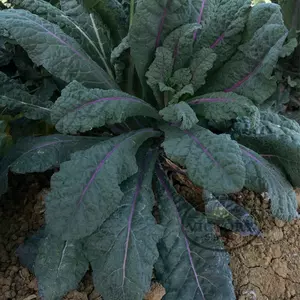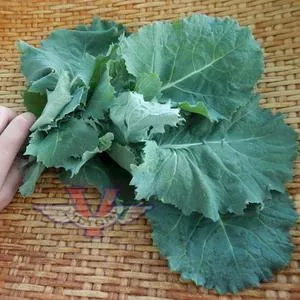


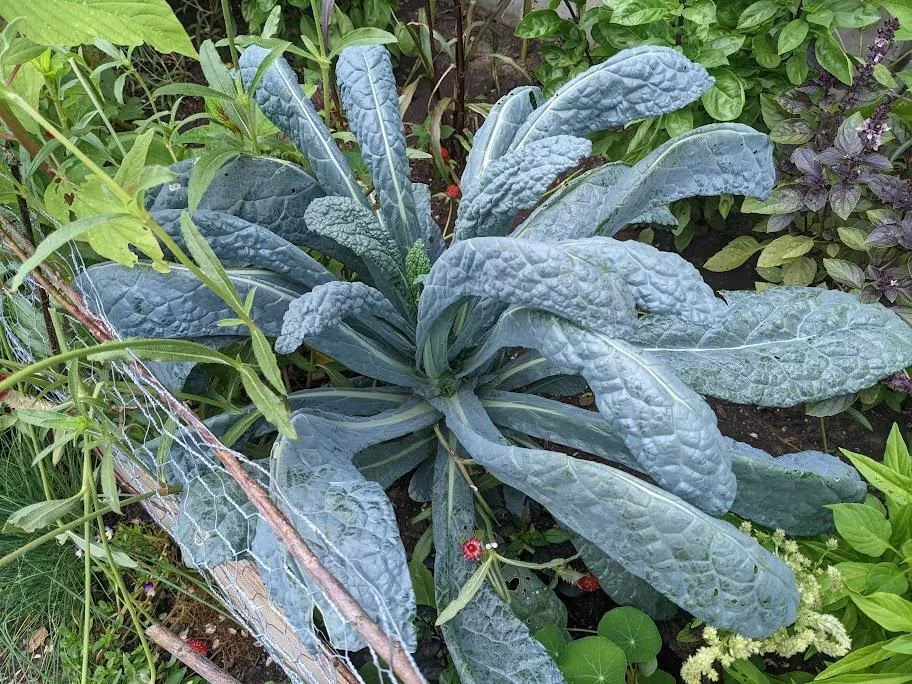


Lacinato, Black or Dinosaur Kale (Nero Di Toscana)
Price: $3.45
SKU: 3210051This heirloom has a history dating back to at least the 18th Century from the Tuscany region of Italy. It was commercially introduced into the United States back in the 1980s by Renee Shepherd.
Sow seeds ½ inches deep, one inch apart, in rows 24 inches apart. Cover with loose soil. Thin plants to about twelve inches. Avoid disease by not planting where other Brassica (cole crops) plants have grown in the past year or two.
Provides a continuous supply of tasty leaves if you pick from the bottom up. It is cold hardy and the flavors become sweeter and more complex after a hard frost.
- "Tuscan Kale," Dr, Andre Weil M.D.'s web site. Article includes information about the nutritional value and links to recipes.
Customer Reviews:
By Jonathan Schultz on April 9, 2020
First time gardener. I planted in the spring and harvested well into the fall. They tolerated the TN heat really well without developing a bad taste or anything. I grew them in raised beds in a medium of mushroom compost and pine fines. The slugs absolutely love them, so I put copper tape around the beds. That took care of the slug problem. All in all, they were quite easy to grow from seed and easy to care for. I would harvest a few big leaves every week or so, and they kept growing back no problem. I plan on growing this variety for years to come.
By Tyler Storey on March 10, 2020
Just as an experiment, we direct-sowed the kale in mid to late October, under a thin mulch. Nine of ten came shooting up; excellent for sowing directly in the garden. The plants have been vigorous, prolific, and we are still harvesting from them now in the middle of March. The Black Kale has to be the best all-around kale, for everything from soups and steamed greens to kale-slaw and salads.
By S Goodridge on April 19, 2014
So easy to germinate, and fast growing, too. And the thick, blue-green leaves make for the absolute BEST kale chips - the kids gobble them up as fast as I make them. The plants last well into late fall, and it can be overwintered in the Midwest if grown in a cold frame/hoop house. This variety is a must have in any garden.