


Chicory
Price: $3.45
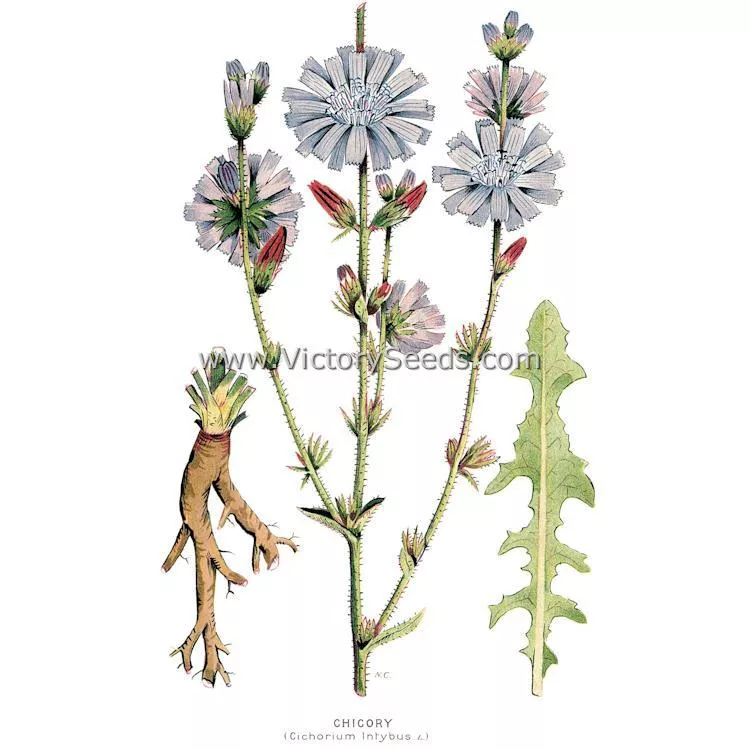
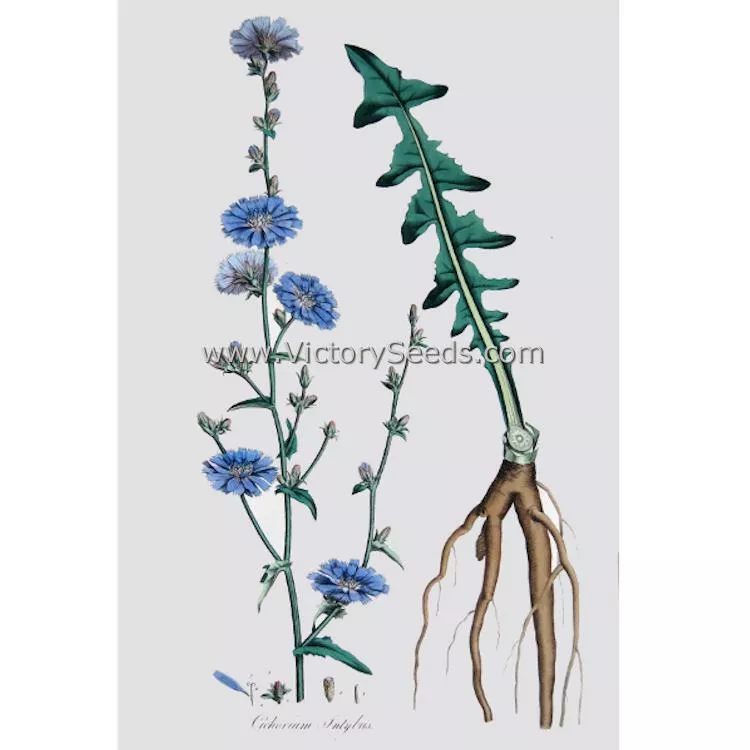
SKU: 4000091Primarily grown in North America as an ornamental, the roots of this plant have been used for centuries in Europe to brew a beverage similar to coffee. For this purpose, its roots are harvested, washed, cut into chunks, dried, and then roasted. It is then ground and used as either a coffee amendment, or a substitute. Interestingly, the process of roasting converts one of its many compounds (e.g. inulin) into oxymethylfurfurol, which give the beverage brewed from it a coffee-like aroma.[2]
It is said that when added to coffee, it acts as a counter-stimulant to coffee's caffeine excitable (jitters) properties. Research indicates that this is due to the compounds lactucin and lactucopicrin, which have a sedative effect on the central nervous system.
Chicory, with sugar beet and rye was used as an ingredient of the East German Mischkaffee (mixed coffee), introduced during the "coffee crisis" of 1976 to 1979. Some beer brewers use roasted chicory to add rich flavor to their stouts. USDA Zones 3-9. Perennial.
By ordering this seed, you are agreeing that it is allowed in your area or that you will not be cultivating it in a state where it is deemed a noxious weed. Since regulations change often, the following list may not be conclusive. Please check with your state and local laws to verify that you can grow this in your area. It may be classified as a "noxious weed" in your state and cultivation prohibited.
- "A Modern Herbal," Mrs. M. Grieve, 1931, pgs. 197-199.
- "Tyler's Honest Herbal: A Sensible Guide to the Use of Herbs & Related Remedies," Steven Foster & Varro E. Tyler, Ph.D., MJF Books, New York, 1999, pgs. 115-117.
- "Peterson's Field Guide to Medicinal Plants and Herbs of Eastern and Central North America," Steven Foster & James A. Duke, Houghton Mifflin Harcourt, New York, 2014, pgs. 263-264.
- "Handbook of phytochemical constituents of GRAS herbs and other economic plants," James A. Duke, CRC Press, Boca Raton, Florida, 1992.
- "Dr. Duke's Phytochemical and Ethnobotanical Databases," U.S. Department of Agriculture, Agricultural Research Service, 1992-2016.
Customer Reviews:
By rosemary kelley on January 3, 2014
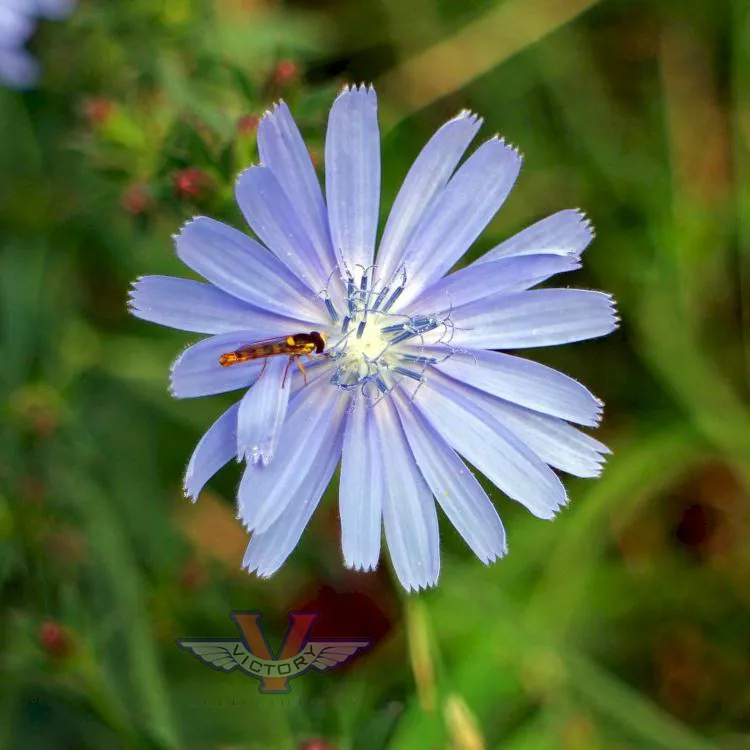
I started the seeds inside and the germination was good. I then planted this in my herb garden. This plant produces very pretty flowers and can grow quite tall. I had to move some other things and trim it a couple times to keep it in the space I allowed for it. I will transplant it this year to give it more room. It really attracts the bees and good bugs which is one of the reasons I grew it. The purple flowers are just so pretty in my herb garden when a lot of these don't produce a flower. Will grow more for my other gardens.