
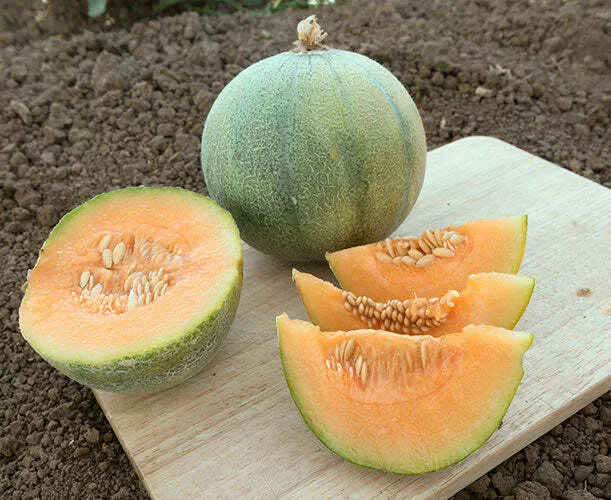
Minnesota Midget Melon
Price: $3.45
SKU: 3250351'Minnesota Midget' was bred by the University of Minnesota and introduced by Farmer Seed & Nursery Company of Faribault, Minnesota in about 1948.
Indoors, plant two to three seeds per pot, ½ inch deep, thinning to best plant. Do not disturb roots.
Outdoors, plant six to eight seeds, ½ inch deep, in hills spaced four feet apart. Transplant or thin to three plants per hill.
Young plants are cold sensitive and some cover protection at nights may be required. Mulch or cultivate to control weeds.
- "Vegetable Cultivar Descriptions for North America – Melon: Lists 1-27 Combined," Edited by James D. McCreight, U.S. Agricultural Research Station, Salinas, California.
Customer Reviews:
By Greg Luce (SW Idaho) on September 2, 2023
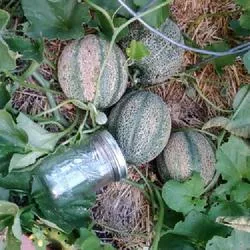
I bought my seeds from a big box (5 stars is for plant variety only). Planted 3 seeds in each of 9 pots 3 weeks prior to harvesting garlic (USDA zone 7a). Only 7 emerged, 2 in one pot that I thinned to one stronger plant. From raised beds I harvested garlic early July, and transplanted the 6 potted midgets. By late August we harvested 2 cantaloupe and have 20 more growing. Idaho is a great cantaloupe state, but these are certainly much better than store bought. Lessons learned are to buy seeds from Victory next year and start them maybe 4 weeks before expected garlic harvest. Photo shows just one "bunch" of midgets with canning jar for reference.
By Kate (Massachusetts zone 5) on August 28, 2022
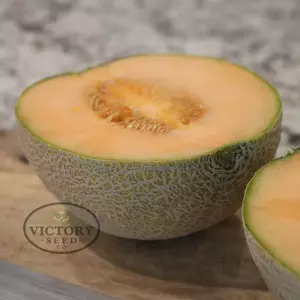
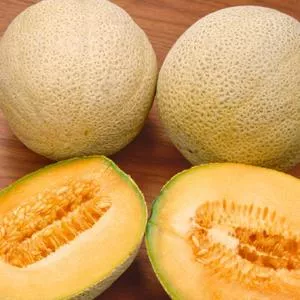
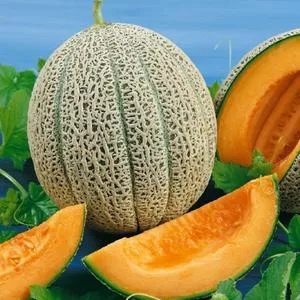
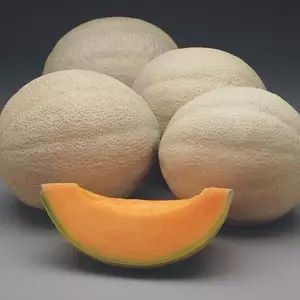
I soaked the melon seeds for two days then direct planted in May after last frost. All the seeds sprouted. <br>Not sure of how many melons we had since we ate them as they ripened, but it wasn’t as many as I had expected out of the several vines we had on an 8’ overhead trellis. A bit of an underwhelming crop. But where we’ve had no success with melons prior, we were happy to get anything. We planted in the southeast side of the garden for max sunshine. Once the melons ripened, several fell off on their own. The rest stayed hanging on the trellis. They have a tan netting and light orange to yellow color showing through when ripe. They keep for about 5 or 6 days unrefrigerated. Taste is similar to cantaloupe but not as sweet. The sizes varied from 4 to 6 inches in diameter. They did not ripen simultaneously, so we weren’t inundated all at once and had a small glut at the end.<br>We plant using the no-till method. We top dressed with last season’s finished compost which had lots of acid due to all the pine needles and oak leaves in it. Wondering if high acid content may have affected yield. We’ll be adding some lime to the compost to see if it helps develop more melons next year.<br>
By Mike Aiello on August 17, 2018
Started seeds indoors in April. Transplanted 30 days later outside in May. 90 days later, baseball and softball sized melons ripened. Individual sized, sweet fleshy texture. Slight netting outsides, makes another first for enjoyment. Fun to watch grow. Fragrant on the vine.