Coneflower, Pale Purple
Echinacea pallida
Price: $4.51
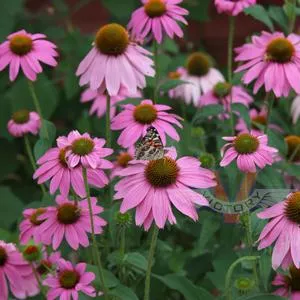
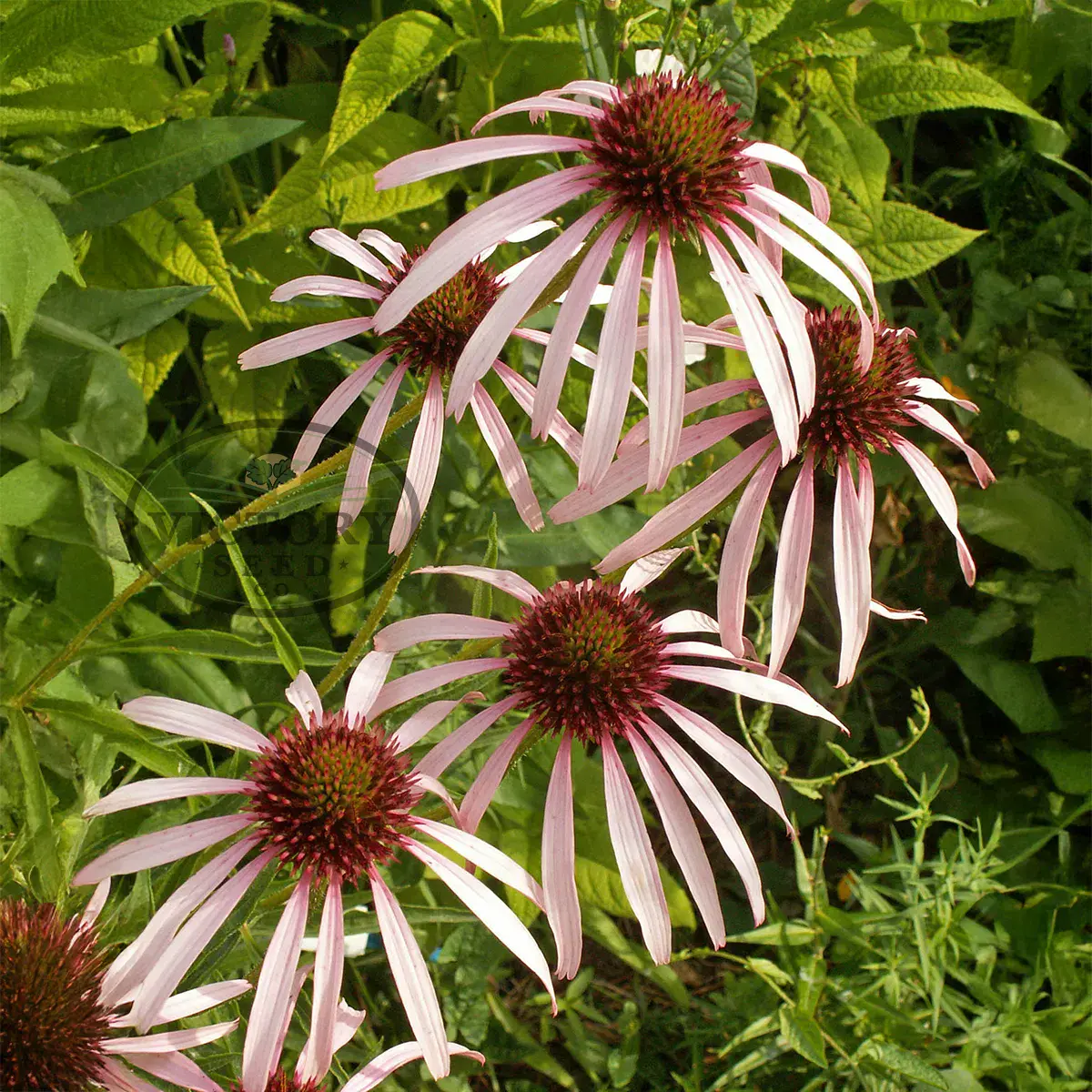
SKU: 40001701Pale Purple Coneflower (Echinacea pallida) is a native perennial in the aster family (Asteraceae). It grows 2 to 3 feet tall in an upright, clump-forming shape. The flowers are about 3 inches wide, with coppery-orange center cones and thin, pale-purple to pink ray petals that droop sharply downward. It blooms in early to mid summer, ahead of many other prairie plants.
This coneflower is native to the eastern and midwestern United States, roughly from Indiana to Iowa and south to Texas, Louisiana, Alabama, and Georgia. In the wild it grows in limestone glades, oak savannas, fields, prairies, and along railroad lines, though it has become less common in those spots over time. It also grows well outside its native range.
It is a low-maintenance, adaptable plant. It handles drought, heat, humidity, and poor soil, and it starts easily from seed. It prefers dry to medium, well-drained soil in full sun, but it will take part shade. The plant grows from a central taproot. Once that root is set, the plant is very drought tolerant and needs little care, but it also becomes hard to move. The taproot needs a good cover of soil to make it through winter.
Left alone, the plant self-seeds freely. Removing spent flowers slows this down if you want fewer volunteers. Wildlife uses it heavily. The flowers feed native bees, butterflies, and hummingbirds, and the leaves are a host food for Ottoe skipper larvae. It is also deer resistant.
This coneflower is native to the eastern and midwestern United States, roughly from Indiana to Iowa and south to Texas, Louisiana, Alabama, and Georgia. In the wild it grows in limestone glades, oak savannas, fields, prairies, and along railroad lines, though it has become less common in those spots over time. It also grows well outside its native range.
It is a low-maintenance, adaptable plant. It handles drought, heat, humidity, and poor soil, and it starts easily from seed. It prefers dry to medium, well-drained soil in full sun, but it will take part shade. The plant grows from a central taproot. Once that root is set, the plant is very drought tolerant and needs little care, but it also becomes hard to move. The taproot needs a good cover of soil to make it through winter.
Left alone, the plant self-seeds freely. Removing spent flowers slows this down if you want fewer volunteers. Wildlife uses it heavily. The flowers feed native bees, butterflies, and hummingbirds, and the leaves are a host food for Ottoe skipper larvae. It is also deer resistant.
Sun Requirements: Full Sun to Partial Shade
Water Needs: Low
USDA Hardiness Range: 3a|9b
Wildlife Interactions: Attracts Bees
Wildlife Interactions: Attracts Butterflies
Wildlife Interactions: Deer-Resistant
Native: Eastern and Midwestern United States
Genetic Classification: Open Pollinated
Water Needs: Low
USDA Hardiness Range: 3a|9b
Wildlife Interactions: Attracts Bees
Wildlife Interactions: Attracts Butterflies
Wildlife Interactions: Deer-Resistant
Native: Eastern and Midwestern United States
Genetic Classification: Open Pollinated
Planting Instructions:
Germination Time : 10 to 20 days
Plant Height: 24 to 48 inches
Planting Depth: 1/8-1/4"
Spacing after Thinning: 12 inches
Sow the seed in early spring through summer, up until two months before first fall frost. Choose an area that receives full sun and has rich soil. If the seeds are cold conditioned moist for about 2 weeks, germination will improve.
The flowers can be enjoyed cut, dried with the petals removed, and has also gained popularity for its medicinal properties.
The name says a lot about the plant. Echinacea comes from the Greek word echinos, meaning hedgehog or sea urchin, a nod to the spiny seed head. The species name pallida means pale, which fits the soft color of the petals.
The roots of Echinacea have a long history of medicinal use by Native American tribes and early settlers, and they are still used today in herbal remedies and tonics.
The roots of Echinacea have a long history of medicinal use by Native American tribes and early settlers, and they are still used today in herbal remedies and tonics.
Customer Reviews:
Do you have experience with this one? 📝 📣 Write a review!
No reviews have been posted yet.