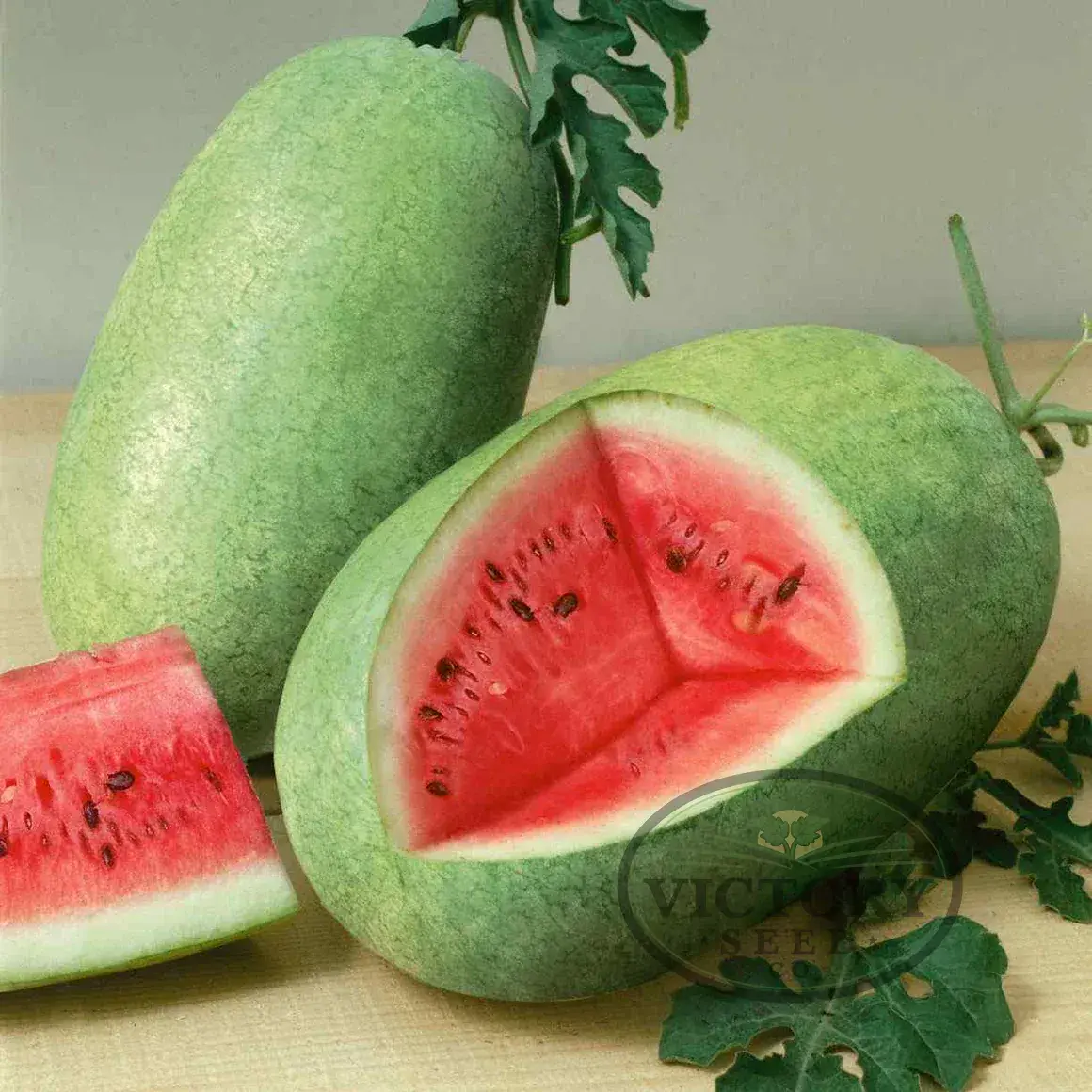
Charleston Gray No. 133 Watermelon
Price: $3.45
SKU: 3250401The original 'Charleston Gray' was developed and introduced by the ARS Vegetable Breeding Laboratory in Charleston, South Carolina in 1954.[1] 'Charleston Gray No. 133' was stabilized from a selection of 'Charleston Gray' by a "Mr. Stevenson from India"[2] for improved disease resistance, and introduced in 1961.
Genetic Classification: Open Pollinated
Outdoors, plant three to four seeds, ½ inch deep, in hills spaced four to six feet apart. Transplant or thin to two plants per hill. Young plants are cold sensitive and some cover protection at nights may be required. Mulch or cultivate to control weeds.
• The watermelon cultivar 'Charleston Gray' was developed and released to the public by Charles Fredric Andrus, a horticulturist at the USDA/ARS Vegetable Breeding Laboratory in Charleston, South Carolina. 'Charleston Gray' is resistant to several major diseases of watermelon, produces high yields in a wide range of geographical regions, and handles long-distance shipping with little damage. 'Charleston Gray' has been used in numerous breeding programs for the development of improved watermelon cultivars throughout the world. Source: "Vegetable Grower's News," May 16, 2019.
• "Vegetable Cultivar Descriptions for North America – Watermelon (A-L): Lists 1-27 Combined," Edited by Gary W. Elmstrom, SunSeeds Co. (Bayer-Nunhems), Acampo, California and Fred McCuistion, Seminis Vegetable Seeds, Tifton, Georgia, and Tammy L. Ellington and Todd C. Wehner, Department of Horticultural Science, North Carolina State University, Raleigh, North Carolina.
Customer Reviews:
By Michael (Monticello, FL) on July 13, 2026
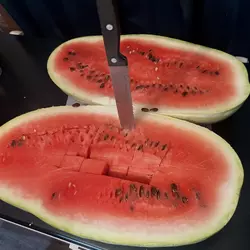
This is an absolutely fantastic watermelon. I have tried many different varieties over the years and these have surpassed all others by miles. North Florida provides a hot and humid climate and all sorts of pests. This year, we went from a terrible draught to excessive rainfall. These plants were pretty much maintenance free outside of needed watering. I didn't have to spray anything the whole season. Around five to six, 33-38lb watermelons per vine. An extremely crisp and sweet texture. I've yet to run into one with a gritty texture. Several comments from others that it was the best watermelon they have tasted in many years. Which says a lot coming from a place where we hold a watermelon festival each year.
By Crissa Becker on November 11, 2017
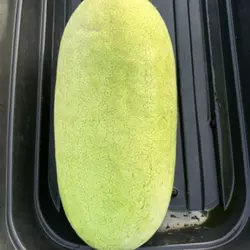
Charleston Gray No. 133 watermelons have great flavor, great yields, and great disease-resistant fast-growing vines. They still sometimes get diseases, but I haven't grown any other varieties that do better.